The case against the all-in-one AI assistant
Why bundling chat, voice, image-gen, browsing, and agents into one product makes each one worse — and what to use instead.

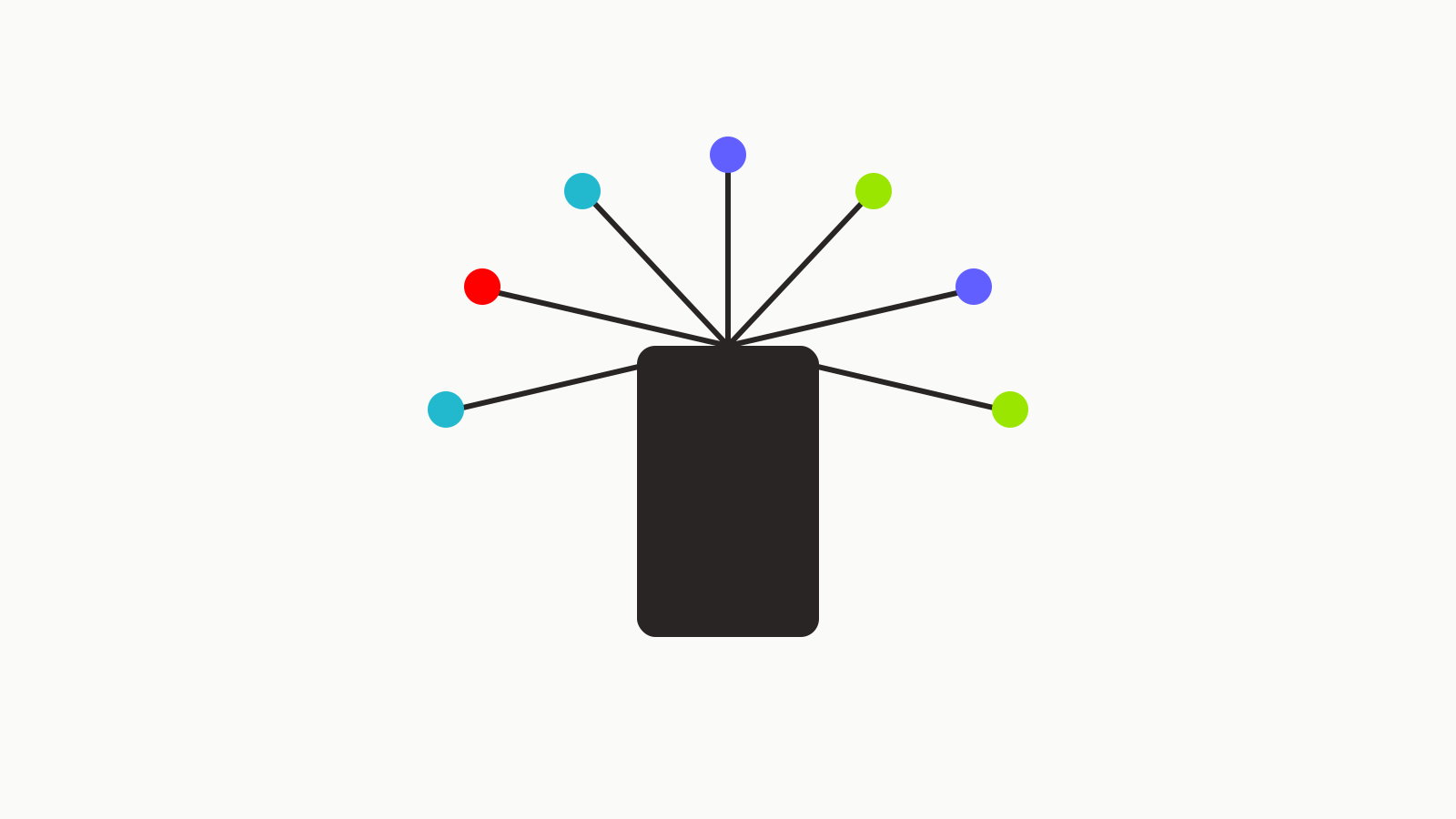
Every AI product in 2026 is becoming an all-in-one assistant. ChatGPT has chat, voice, image gen, browsing, agents, custom GPTs, and a marketplace. Gemini has chat, search, Workspace integration, image gen, and agents. Even Claude is creeping toward "do everything" with Projects and tool use. This essay is the case against the all-in-one model — why bundling makes each part worse, and what to use instead.
The bundling tax
Every feature in a product fights every other feature for design budget, attention, and quality. When a single team ships chat, voice, image-gen, browsing, agents, and a marketplace, they're spreading their best work across all of them — which usually means each one is the third-best version of itself.
You see this play out concretely:
- The image generation in ChatGPT is good, but not as good as Midjourney.
- The voice mode in ChatGPT is good, but not as integrated as a dedicated voice product would be.
- The browsing in ChatGPT works, but Perplexity is better at citation discipline.
- The agents in ChatGPT are early, but dedicated agent tools have better tool integration.
ChatGPT isn't doing anything wrong — they're shipping a lot of features at high quality. But the all-in-one positioning means that for any specific task, there's almost always a more focused tool that does it better.
Why users keep asking for all-in-one anyway
The pitch is compelling: one app, one bill, one place to do everything. App-switching tax is real; bill consolidation is satisfying. "Why open seven tabs when I can open one?"
The problem is that the all-in-one product becomes its own kind of tab-switching — you're not switching tabs, you're switching modes within one app. Voice mode UI is different from chat UI is different from image gen UI is different from agent UI. The friction moves but it doesn't disappear.
A better default
The default we recommend for most readers:
- One AI chat tool for the bulk of your AI work. Pick on multi-model fluency. oran.chat is one option; alternatives in our comparison.
- One dedicated tool for each specialized task you actually use:
- Image generation: Midjourney or Ideogram, not ChatGPT image
- Voice: a dedicated voice product if voice matters to your work; native ChatGPT voice if it's occasional
- Coding: an AI-first editor (Cursor / Claude Code / Windsurf — see comparison)
- Cited research: Perplexity, not ChatGPT search
The total cost is similar to ChatGPT Plus + Claude Pro + Gemini Advanced ($60/mo). The quality on every task is higher.
When all-in-one IS the right answer
If your AI use is shallow across many surfaces — occasional image gen, occasional voice, occasional research, mostly chat — the all-in-one model serves you fine. The tax of multiple specialized tools isn't worth it for occasional use.
The pattern reverses when one of those surfaces becomes core. The day image gen becomes core to your work, ChatGPT's image gen will frustrate you and you'll switch to a dedicated tool. Be honest about which surfaces are actually core, and adopt accordingly.
The big picture
There's a long history of products that try to be everything for everyone. They usually don't survive — they either focus down to a specific thing they're best at, or they lose to focused competitors on each axis. The all-in-one AI assistant probably follows the same pattern over the next three years: the best ones will get more focused (around chat-and-reasoning), and the specialized tools will get better.
For now, the practical advice is: don't over-pay for the bundle. Pick the focused tools that match your actual work.
The thinking is yours, the models do the typing. The same principle applies to tool selection: pick tools that respect what you're trying to do, not tools that try to do everything to you.
More tool-choice essays in Essays.