Context engineering, without the hype
Context engineering is the term that replaced prompt engineering in 2026. Stripped of the buzzwords, here is what it actually means for getting better answers.

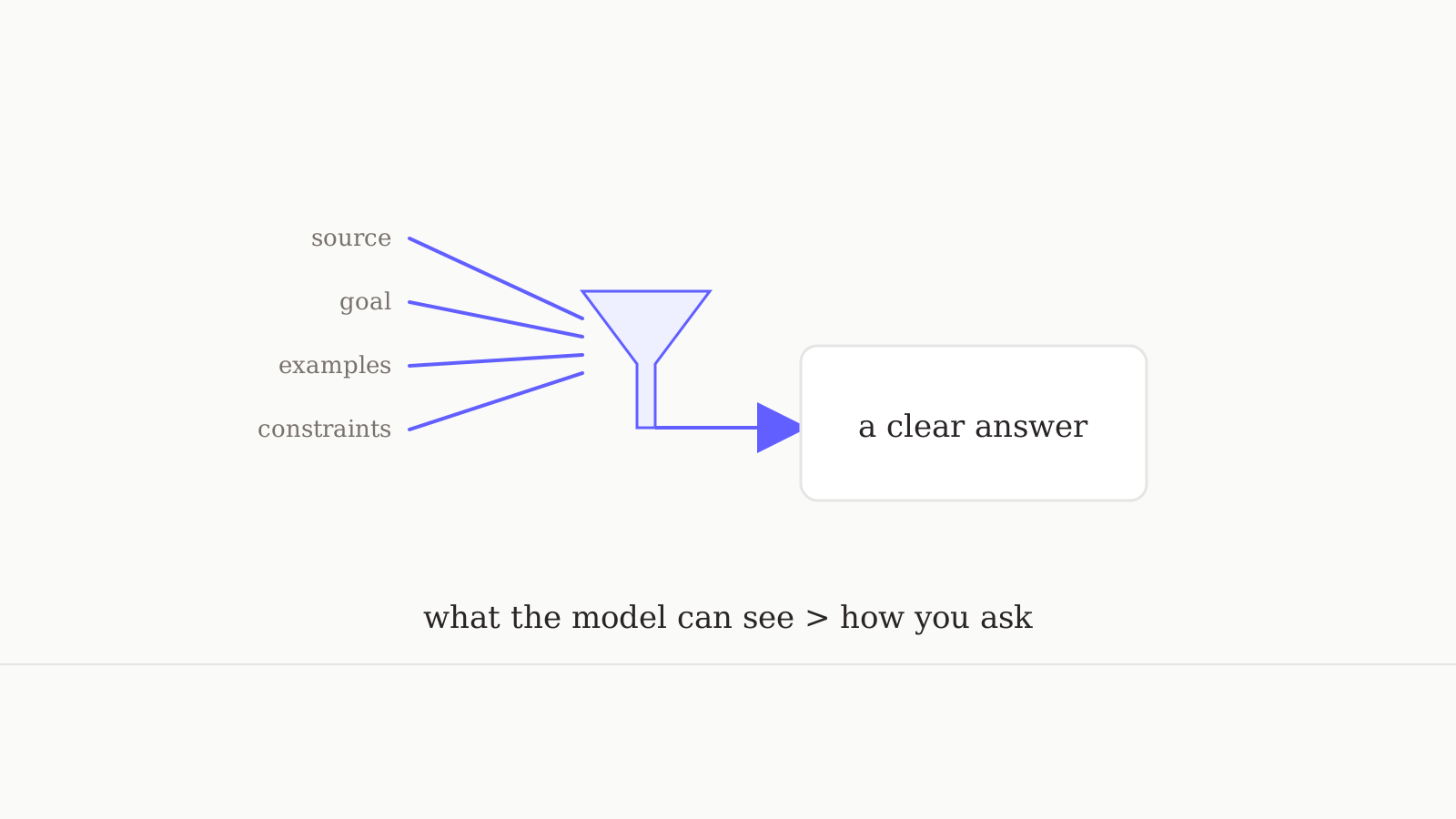
"Prompt engineering" was the skill of 2024. In 2026 the phrase you hear is context engineering — and a survey of IT and data leaders found 82% now see the old discipline being absorbed into it. Strip away the buzzwords and the idea is simple: most bad AI answers don't come from a badly worded question, they come from the model not having the right information in front of it. Prompt engineering is how you ask; context engineering is what the model can see. Here's the practical version.
What actually changed
The useful one-liner from the people doing this work: prompt engineering gets you the first good output; context engineering keeps the thousandth output good. A clever prompt can win a single impressive answer. Reliable answers, day after day, come from controlling what goes into the model — the source material, the goal, the constraints, the examples.
| Prompt engineering | Context engineering | |
|---|---|---|
| Focus | How you phrase the request | What information the model has |
| Failure it fixes | Vague or ambiguous asks | Missing, stale, or messy inputs |
| Scales to | One good answer | Consistent answers over time |
The practical version (no code required)
You don't need data pipelines to get the benefit. For everyday work, context engineering is five habits:
- Give it the source, don't describe the source. Paste the actual email, doc, or error — not your paraphrase of it. The model can't reason about what it can't see.
- State the goal and the audience. "Explain this for a new hire" and "explain this for the board" want different answers from the same facts. Say which.
- Constrain the shape. Length, format, what to leave out. Constraints remove the most common failure mode: a technically-correct answer in a useless form.
- Show one example of good. A single example of the output you want does more than a paragraph describing it.
- Keep a reusable instruction set. The framing you carry into every chat — who you are, how you like answers — shouldn't be retyped each session. That's the whole point of one instruction set for every model.
A worked example
Weak (prompt-only): "Write a polite reply declining this vendor." Strong (context-engineered): paste the vendor's actual email, then "Decline this in two sentences. Audience: a vendor we may want next year, so warm not cold. Don't commit to a future date. Match the plain tone of my last reply, pasted below." Same model, dramatically better output — because it can finally see what it needs.
Where this fits
Context engineering and good prompting aren't rivals; the prompt patterns in five prompt patterns that survive every model update and a portable system prompt across GPT, Claude, and Gemini are how you operationalise it. The deeper payoff shows up when you stop re-explaining yourself to a new tool every time — which is part of why keeping your context in one place, across models, beats scattering it. See how oran.chat carries your instruction set across models, or try it free. More guides in Playbooks.